Tier 2 Builders Explained: What They Are and How to Choose One
The short answer
A Tier 2 builder is a mid-sized head contractor. Most people in the industry use the term for builders that run projects somewhere between about $20 million and $150 million. Tier 2 firms sit between the large national Tier 1 contractors and smaller Tier 3 builders. There is no official register of builder tiers in Australia. The label describes scale, not quality.
Developers, asset owners and project managers use "Tier 1" and "Tier 2" all the time, usually without defining them. That matters when you are building a tender list, because the tier you go to market in shapes who prices your job, what you pay for overheads, and how much senior attention your project gets. This guide explains what the tiers mean in practice, when a Tier 2 builder is the right choice, and how to check one properly before you sign.
We are a Tier 2 builder ourselves, so we have an obvious interest. We've tried to write the guide we would want to read if we were on the other side of the table, including the cases where a Tier 2 builder is not the right fit.
Tier 1, Tier 2 and Tier 3 at a glance
The bands below are rules of thumb. You will see them quoted differently by recruiters, quantity surveyors and lenders, and many builders work across two tiers depending on the sector.
| Tier 1 | Tier 2 | Tier 3 | |
|---|---|---|---|
| Typical project value | $250 million and above, including major infrastructure | About $20 million to $150 million, with larger Tier 2 firms going higher | Up to about $20 million |
| Rule-of-thumb turnover | $1 billion or more a year | Around $200 million a year | Around $50 million a year |
| Apartment work in NSW (Building Commission NSW view) | 500 to 3,000 apartments a year; buildings over 10 storeys | 200 to 500 apartments a year; typically 6 to 10 storeys | Up to 200 apartments a year; typically 3 to 6 storeys |
| Typical clients | Governments, large listed developers, infrastructure owners | Private and institutional developers, operators, community housing providers, government agencies | Private developers, owner-occupiers, smaller institutions |
| What you usually get | Deep balance sheet, large in-house teams, capacity for very large or multi-stage contracts | Directors involved in the project, sector specialists, lower overheads than Tier 1, capacity for complex buildings | Owner-led delivery, low overheads, good for simpler and smaller buildings |
| What to watch | Smaller projects can get less senior attention; higher preliminaries and overheads | Financial capacity relative to your contract size; how many large jobs they are running at once | Capacity on complex or multi-storey work; financial resilience |
The turnover figures and the Tier 1 threshold follow a rule of thumb that is widely repeated in Australian property circles. The Tier 2 and Tier 3 project ranges reflect how we see projects tendered in Sydney and Melbourne. The apartment figures come from a Building Commission NSW briefing on industry capability for apartment, hotel and aged care buildings. All are listed under sources below.
Tier describes size, not quality
The most common misunderstanding we hear is that Tier 1 means better. It doesn't. Tier is shorthand for how big a contract a builder can carry, financially and operationally. Quality comes from the team on your job, their systems and their experience with your type of building.
Plenty of award-winning buildings in Sydney and Melbourne are delivered by Tier 2 builders. Master Builders excellence awards are judged by building type and price band, so mid-tier firms regularly win in their categories. On the other side, a $40 million project might be one of hundreds in a Tier 1 portfolio, and be staffed accordingly.
The better question is fit: does this builder regularly deliver projects of your size, in your sector, with your level of complexity, and will its senior people be involved?
When a Tier 2 builder is usually the right fit
- Your project is between roughly $20 million and $150 million. At this size you are a significant job for a Tier 2 firm and a small one for most Tier 1s.
- The building is complex but has a single site team. Think tight inner-city sites, heritage fabric, occupied buildings, staged works or high-rise student accommodation.
- You want decision-makers in the room. At Tier 2, directors and general managers usually attend project control groups rather than delegating them.
- Sector experience matters more than scale. A builder that has delivered several student accommodation towers or aged care homes brings lessons you would otherwise pay for.
- You want builder input before the design is locked. Many Tier 2 builders offer early contractor involvement (ECI), where the builder tests buildability, cost and programme during design.
One example from our own work: Scape Lachlan in Kensington is two student accommodation towers with 521 beds on a constrained site near UNSW. We used a top-down construction method to deal with the site, and the project received its occupation certificate 14 weeks ahead of programme.

When you may need a Tier 1 builder instead
A Tier 2 builder is not always the answer. You will usually be looking at Tier 1 if:
- the contract is well above $150 million to $250 million, or is one contract for a multi-tower precinct
- it is major infrastructure such as transport, hospitals at scale or large civil works
- your financier or government funding conditions require a builder of a certain size or balance sheet
- the security, bonding or insurance requirements are beyond a mid-tier balance sheet
For context, Infinity Constructions takes on projects up to about $150 million. Above that, we'll tell you if we're not the right builder.
How to check a Tier 2 builder before you sign
Choosing a builder is a counterparty risk decision as much as a pricing one. Construction has the highest number of company insolvencies of any industry in Australia, and NSW accounted for 44% of construction insolvencies nationally in the 2025 financial year. These checks are the ones experienced developers and project managers run:
- Right licence, right entity. Confirm the company signing your contract holds the licence for the work: a contractor licence on the NSW Fair Trading register, or Commercial Builder registration in Victoria (Commercial Builder Unlimited for high-rise work). Check it against the public register, not the tender submission.
- Registration for regulated buildings in NSW. Under the Design and Building Practitioners Act, the building practitioner on class 2 buildings (apartments) and certain class 3 and 9c buildings, which include student accommodation, hotels and aged care, must be registered with NSW Fair Trading.
- An independent rating. The NSW Government-backed iCIRT rating, run by Equifax, gives builders a star rating based on factors including track record, financial capacity and conduct. A rating of three stars or more appears on the public register, and iCIRT reports that more than 59% of NSW lenders now use it in due diligence.
- Financial health, from public records. Pull current and historical ASIC extracts for the company and its directors, search the courts for winding-up applications, and order a commercial credit report. Ask for recent financial statements under a confidentiality agreement and look at work in hand against capacity.
- Completed projects like yours. Ask for three completed projects of a similar type and roughly similar value, then go and look at them. A builder's best project in another sector tells you less than an average one in yours.
- References from clients and subcontractors. Speak to recent developer clients, and also to two or three subcontractors. Subcontractors will tell you how a builder pays and how it behaves under pressure.
- Continuity of the business. Make sure the entity contracting with you is the one that delivered the reference projects, with the same directors. Frequent new company names are a warning sign.
- Systems and accreditation. Look for certified management systems (ISO 9001 quality, ISO 14001 environment, ISO 45001 health and safety). If your project has Australian Government funding, check whether the builder needs to be accredited under the WHS Accreditation Scheme run by the Office of the Federal Safety Commissioner (OFSC).
- The team you will actually get. Ask for the names of the project manager, site manager and design manager, check what else they are running, and write the key people into the contract where you can.
- Preconstruction and contract posture. Ask how the builder manages design, estimating and buildability before construction starts. Then read its marked-up contract: the positions it takes on security, retention, liquidated damages, extensions of time and variations show how it plans to manage risk.
Delivery models a Tier 2 builder should be able to offer
The right contract model depends on how developed your design is and how much risk you want to hold. A capable Tier 2 builder should be comfortable with most of these.
| Model | How it works | Usually suits | Examples from our projects |
|---|---|---|---|
| Early contractor involvement (ECI) | The builder is engaged during design to advise on buildability, cost and programme, usually before converting to a lump sum or D&C contract | Complex sites, tight budgets, projects where design decisions drive cost | Canva headquarters, Infin8 Knoxfield |
| Design and construct (D&C) | The builder takes responsibility for completing the design and building it, usually from a developed design | Owners who want one point of responsibility and price certainty | Atura Hotel Oran Park, Acacia Apartments, Scape Lachlan |
| Lump sum (construct only) | The owner's team completes the design; the builder prices and builds it | Fully documented projects, especially heritage and architecturally led buildings | Pensione Hotel, Canva headquarters |
| Cost plus | The owner pays actual cost plus an agreed margin, with open-book reporting | Fast-moving fit-outs and refurbishments where scope is still changing | Privé Melbourne, Kingsgrove Connect |
| Construction management | The builder manages trade packages on the owner's behalf for a fee; the owner holds the trade contracts | Experienced owners who want control and are comfortable holding more risk | Available on request |
Questions to ask at the tender interview
- What are the last three projects you completed in this sector at a similar value, and can we visit them?
- Who will run our project day to day, and what else are they responsible for?
- Which director will attend our project control group meetings?
- What are the biggest buildability risks you see in our current design, and what would you change?
- Which assumptions or exclusions in your price are most likely to move?
- How much of your current work in hand is with repeat clients?
- How do you pay subcontractors, and how often?
- Can you give us two subcontractor references from your current projects?
Red flags
- A price well below the others with no clear explanation of where the saving comes from
- Reluctance to name the project team, or a team that changes after the contract is signed
- A licence, insurance policy or rating held by a different company in the group from the one contracting
- Several company names, or recent changes of name, for what looks like the same business
- Payment disputes or adjudications with subcontractors on the public record
- No completed projects of your type, or only projects at a fraction of your value
Where Infinity Constructions fits

Infinity Constructions is a Tier 2 commercial builder, founded in Sydney in 1992 by Alan and Andrew Yazbek, with offices in Mascot and Port Melbourne. Here is how we measure up against the checklist above:
- Licences: NSW contractor licence 173 639 C (Infinity Constructions Group Pty Ltd, ABN 95 111 941 792); Victorian Commercial Builder (Unlimited) CB-U 62276 (Infinity Constructions Group Melbourne Pty Ltd)
- Independent rating: 4.5-star Gold iCIRT rating (last rated October 2026)
- Systems: ISO 9001, ISO 14001 and ISO 45001 certified; accredited under the Australian Government WHS Accreditation Scheme (see our approach to safety)
- Project size: up to about $150 million, delivered through ECI, design and construct, lump sum, cost plus or construction management
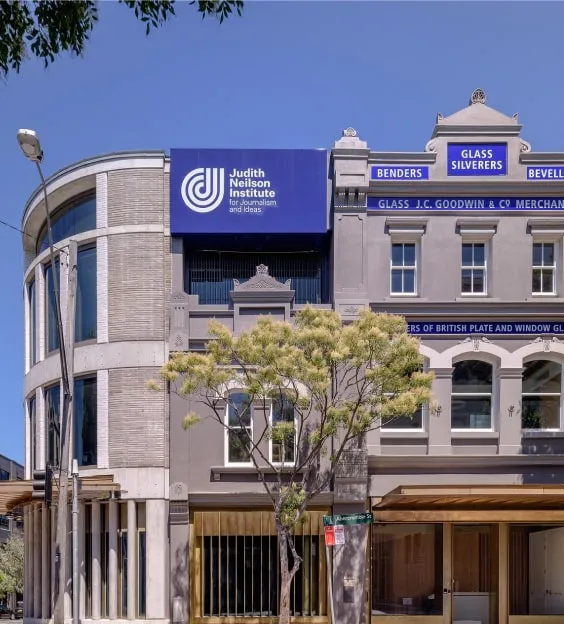
- Repeat clients: nine projects for Scape Australia, two headquarters for Canva, and repeat work for Solotel, Nomad Group and Judith Neilson
Every project, client and architect is listed in our project register. You can check our company details on public registers here.
Frequently asked questions
What is a Tier 2 builder?
A Tier 2 builder is a mid-sized head contractor, usually delivering building projects between about $20 million and $150 million. The term is industry shorthand for scale and capacity. There is no official tier register in Australia.
What is the difference between a Tier 1 and a Tier 2 builder?
Tier 1 builders are large national or international contractors that take on the biggest buildings and infrastructure, typically $250 million and above. Tier 2 builders focus on mid-sized projects, usually with lower overheads and more direct involvement from senior people. The difference is size and financial capacity, not quality.
Are Tier 2 builders cheaper than Tier 1 builders?
Often, but not automatically. Tier 2 builders generally carry lower overheads, which can show up in preliminaries and margin. But price depends more on design, risk allocation and market conditions than on tier, so compare tenders like for like and look closely at exclusions.
Are Tier 2 builders riskier than Tier 1 builders?
Mid-tier builders have been more exposed to the recent wave of construction insolvencies, which is why due diligence matters. The risk depends on the individual company: check its licence, financial records, iCIRT rating, track record and subcontractor references rather than relying on the tier label.
What size project suits a Tier 2 builder?
Projects from roughly $20 million to $150 million are the core Tier 2 range. Below that, a Tier 3 builder may be more economical. Above about $150 million to $250 million, or for a single contract covering several towers, a Tier 1 builder or a larger Tier 2 is usually needed.
How do I check a builder's iCIRT rating?
Search the public iCIRT register run by Equifax. Builders rated three stars or above can appear on it, but publishing is voluntary, so if a builder claims a rating that you can't find, ask them for the certificate.
Who are the Tier 2 builders in Sydney and Melbourne?
There is no official list. Good places to start are Master Builders excellence award winners in your building type and price band, the iCIRT register, and recommendations from quantity surveyors and project managers who run tenders in your sector. Infinity Constructions is a Tier 2 builder working across both Sydney and Melbourne.
Is Infinity Constructions a Tier 1 or Tier 2 builder?
Infinity Constructions is a Tier 2 builder. It delivers commercial and institutional projects up to about $150 million in Sydney and Melbourne, and has done so since 1992.
Talk to us early
If you are putting together a tender list for a project in Sydney or Melbourne, we're happy to give an early view on buildability, programme and procurement before you commit to a contract model. See our ECI and design management service, browse our work in Sydney and Melbourne, or contact the team.